Underground Demons
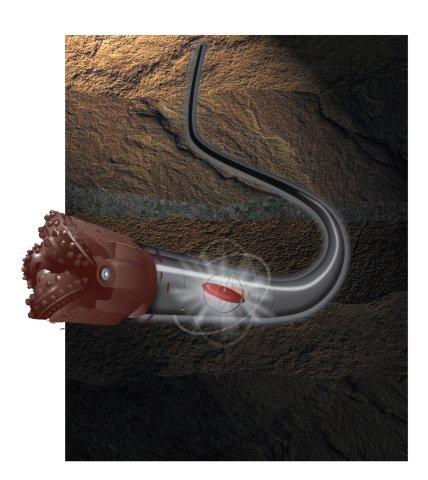
Polaris Tricone Drilling Bit with GPS!
Chapter Summary:
- Extreme pressures: Reservoirs can exceed 2,000 psi (even >10,000 elsewhere), demanding meticulous sealing and mud‑weight control to avoid blowouts.
- How blowouts happen: A high‑pressure path opens along the annulus if the balance fails; BOPs and well control procedures are designed to stop the “genie.”
- Completion basics: After drilling, a completion team prepares the wellbore and installs the SSSV (~30 m below seabed) and topside SSV plus control lines.
- System architecture: Unmanned wellhead platforms route multiphase flow to a staffed production complex; fail‑safe logic protects people and asset.
- Takeaway: Redundancy + fail‑safe engineering keeps high‑energy systems under human control.
Additional Notes:
Details of the Deepwater Horizon oil spill:
https://www.britannica.com/event/Deepwater-Horizon-oil-spill
Here is an illustration of the SSSV (Sub Surface Safety Valve):
https://enggcyclopedia.com/wp-content/uploads/2023/06/sssv.jpeg
Illustration of a SSV (Surface Safety Valve):
https://mall.antonoil.com/uploads/20230913/3b96748c7c427f28e01390f5167f6add.jpg
Notes on Deepest oil wells:
Oil wells are not always drilled straight down, as discussed in Chapter 3 of the book. There is directional drilling and even horizontal drilling. So, we need to consider vertical depth as well as the total length of the bored hole.
- Measured Depth (MD): The total length of the drilled bore — including horizontal sections. Extended-reach wells can have huge MD.
- True Vertical Depth (TVD): The straight-line vertical distance from the surface to the bottom of the well.
- Water Depth (for offshore): The depth from sea surface to seabed — separate from the drilling depth below seabed.
Deepest Well Ever Drilled (Measured Depth)
Z-44 Chayvo Well — Sakhalin I Project (Russia)
Location: Chayvo field, Sakhalin Island shelf (Sea of Okhotsk), Russia.
Operator: Exxon Neftegas Ltd (part of Sakhalin-1 consortium).
Depth: 12,376 m (40,604 ft) measured total depth (MD).
This is considered more of an extended-reach exploration well (as opposed to production well). It was drilled from an onshore/nearshore platform using horizontal/extended reach technology. By measured total length (not strictly vertical depth), this is the deepest oil well ever drilled in the world.
Other Notable Ultra-Deep Wells:
Shendi Take 1 Ultra-Deep Well — Tarim Basin (China)
Depth: Exceeded 10,000 m total depth (reported ~10,100–11,100 m range in some Chinese drilling campaigns). This is part of China’s deep drilling efforts in the Tarim Basin (Xinjiang region). Some sources describe reaching over 10 000 m deeper than any other conventional onshore well. The standout metric is depth reached rather than specific world ranking by production.
Deepest Oil Wells Offshore
There isn’t a widely accepted single deepest “offshore” well by total drilled length that also produced oil (because most ultra-long wells like those on Sakhalin were not drilled from floating rigs far offshore).
From available records, Gulf of Mexico (USA) has a well that has a water Depth: ~7,000 ft (~2,134 m) and Well Depth: ~28,125 ft (~8,570 m) below seabed. This was one of the deepest successful exploratory wells drilled in the Gulf by measured depth.
Perdido Platform — Gulf of Mexico
Water depth: ~2,450 m (~8,040 ft).
Platform type: Deepwater spar installed by Shell.
It is cited as the deepest floating oil production structure in the world.
Ultra-Deepwater Drilling Projects (e.g., Uruguay Raya-1)
Recent news reports describe wells planned in water depths around ~3,400 m (deeper than existing records) — though these are exploration drilling operations still in progress.
Kola Superdeep Borehole: Often referenced in discussions about deepest drilled holes, but this is scientific drilling only — not an oil well. It reached ~12,262 m vertical depth into the Earth’s crust and does not produce hydrocarbons.